Fractional CO₂ Laser Results
Real before-and-after cases from Elyzea Miraflores, Lima
Fractional CO₂ laser creates thermal microcolumns that stimulate deep collagen production and resurface the skin. It's the gold standard for atrophic acne scars and stretch marks. Each case shown here is a real Elyzea patient, treated by Dra. Geldres and photographed with patient consent.
Acne scars & stretch marks
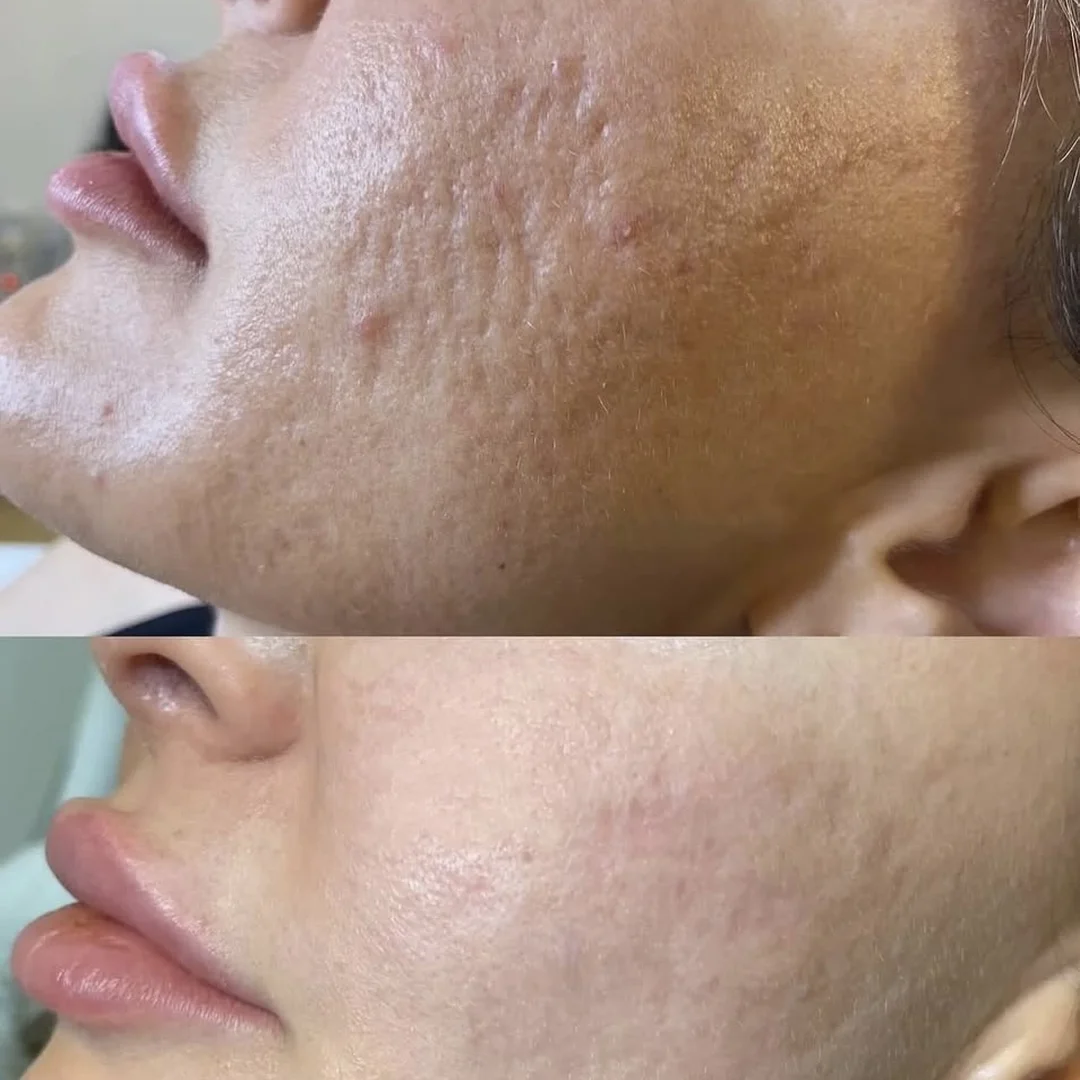
Acne scars around the chin
After CO₂ protocol
Progressive filling of atrophic scars and smoothing of the surface relief.
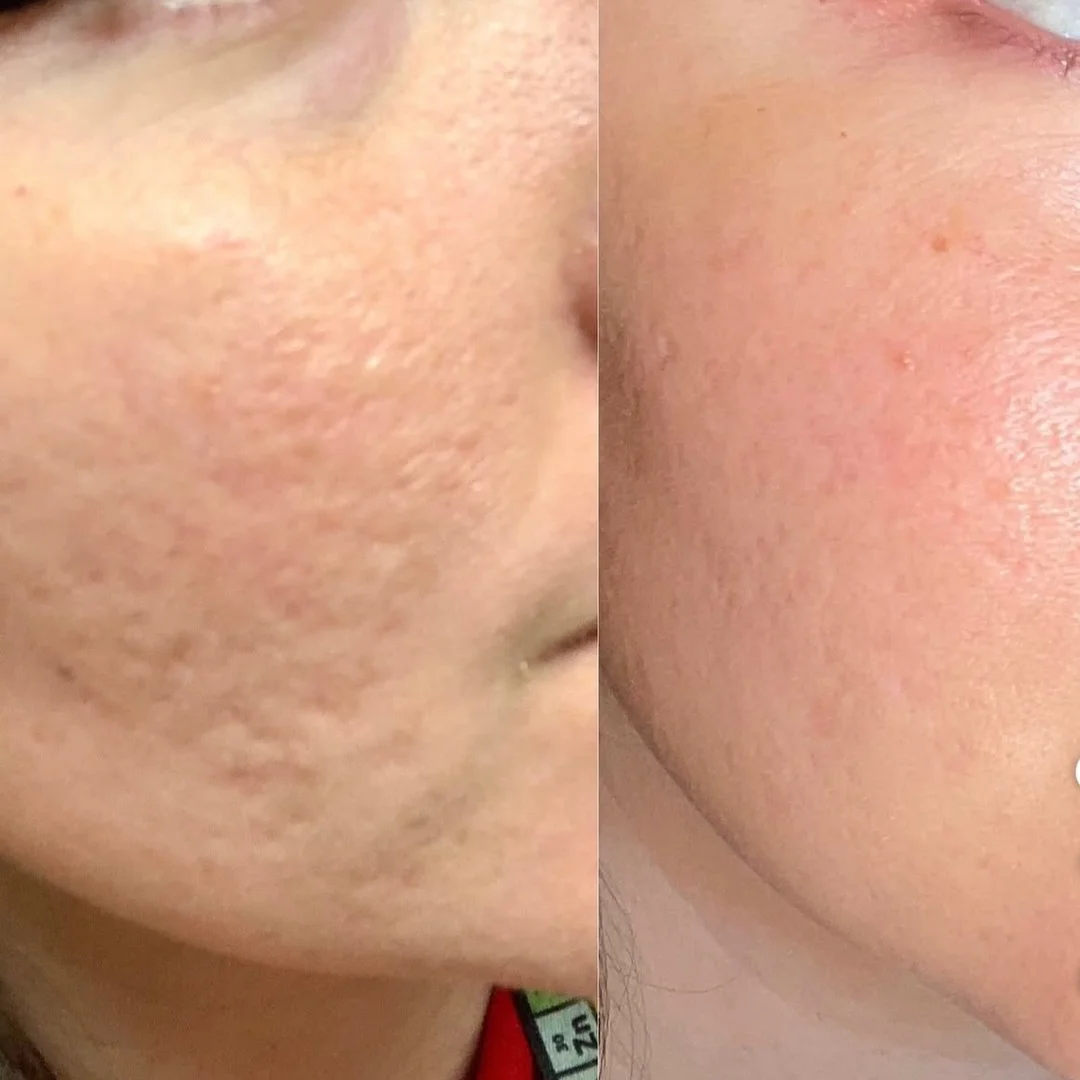
Atrophic acne scarring
After CO₂ protocol
Noticeably smoother surface. Deep stimulation of new collagen.
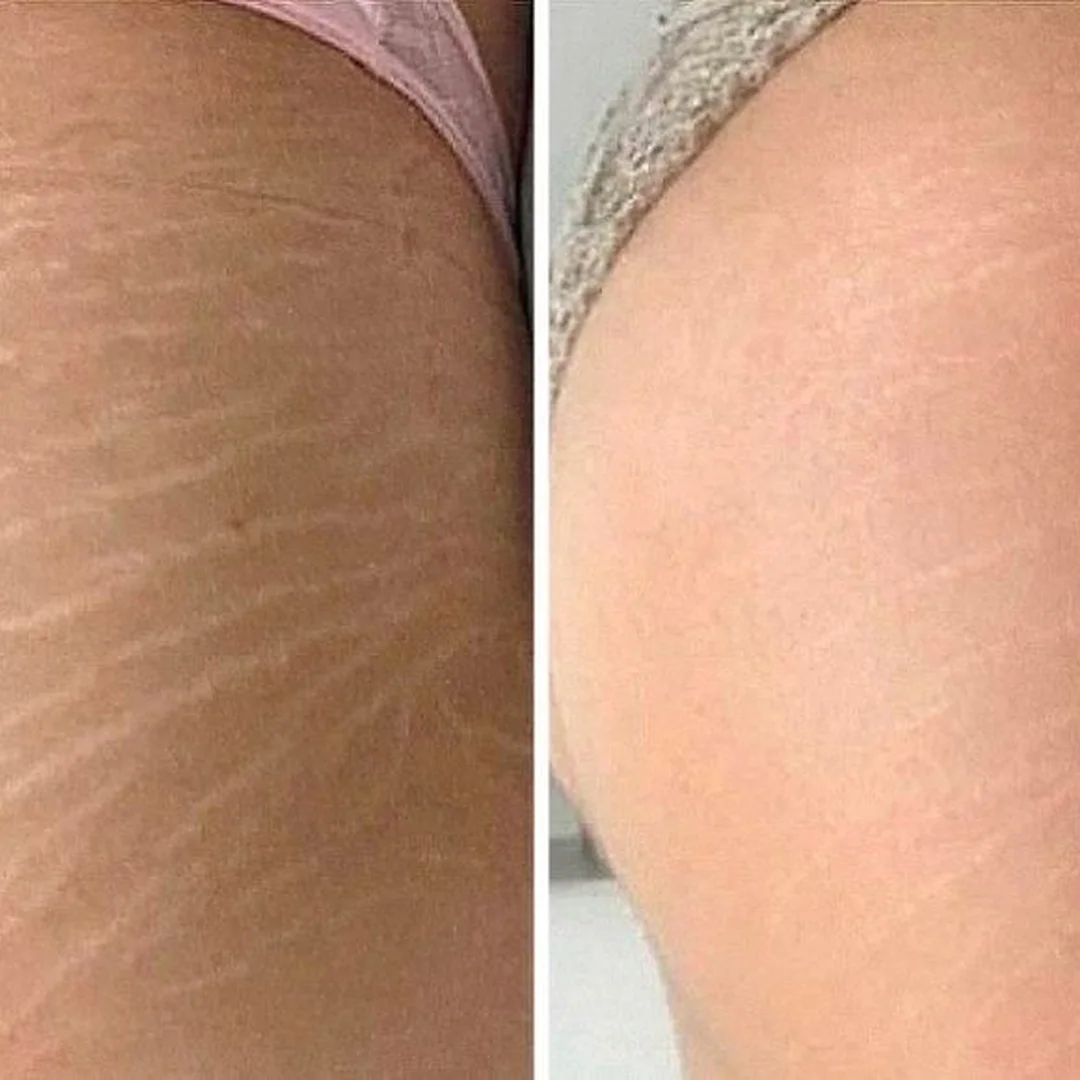
White stretch marks on the thigh
After CO₂ protocol
Dramatic reduction of long-standing stretch marks. More uniform skin with improved texture.
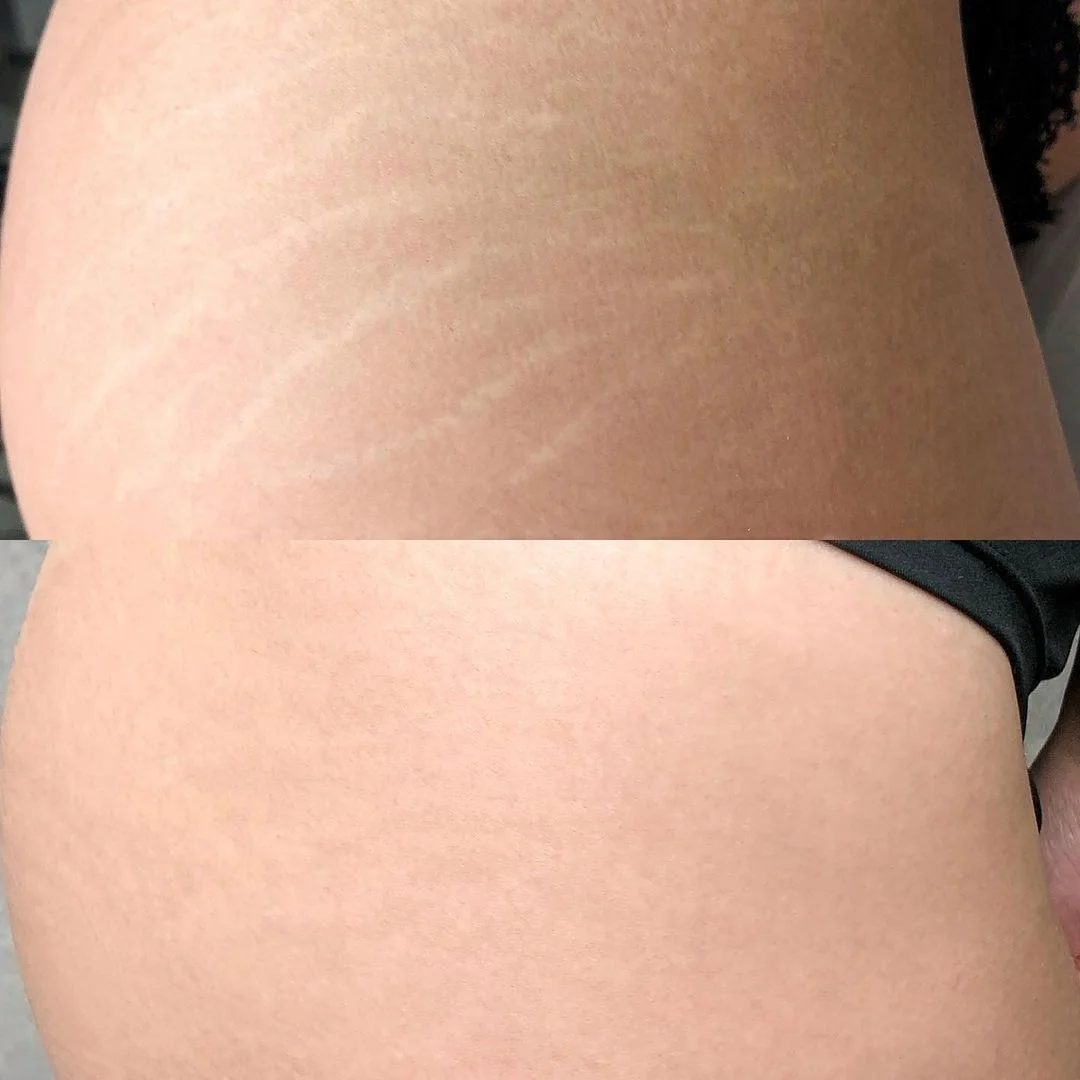
Stretch marks on glutes and hip
After CO₂ protocol
Significant lightening and smoothing. Deep stretch marks lose relief and contrast.
Results are individual and depend on skin type, condition depth, and biological response. Sessions required may vary. Photographs taken by the Elyzea team with patient consent.
How fractional CO₂ builds the results above
Fractional CO₂ laser delivers 10,600 nm wavelength energy in microscopic columns — typically 100 to 200 micrometers wide — that vaporize a fraction of the skin while leaving healthy tissue intact between each column. This "fractional" approach is the difference between traditional fully-ablative CO₂ (weeks of recovery) and modern fractional CO₂ (days of recovery), without sacrificing scar-remodeling power.
Two healing responses follow each session. The vaporized columns trigger rapid reepithelialization from the surrounding intact skin — completing in 5 to 7 days. Simultaneously, residual deep dermal heat triggers neocollagenesis, with collagen and elastin scaffold rebuilding over 3 to 6 months. This deep remodeling is what fills atrophic acne scars from below, lightens long-standing stretch marks, and smooths textural relief.
At Elyzea, Dra. Geldres calibrates spot density, fluence, and pulse duration per scar type — denser passes for ice-pick and boxcar acne scars, lower-density passes on Fitzpatrick IV–VI skin, and tailored settings for stretch mark width and skin location. The device used is a medical-grade fractional CO₂ platform.
Fractional CO₂ session timeline
Session day (Day 0)
Topical anesthesia for 45 to 60 minutes, then a 30 to 60 minute treatment depending on area. Skin feels sunburned and looks bronze. Prescribed ointment is applied immediately.
Days 1–7 (reepithelialization)
Skin progresses from bronzed (days 1–2) to flaking and peeling (days 3–5) to soft pink new epithelium (days 6–7). Plan social downtime during this window. Strict ointment and SPF 50+ are essential.
Weeks 2–6 (sessions 2 and 3)
Residual pink color fades over 2 to 4 weeks. Subsequent sessions are spaced 6 to 8 weeks apart to allow full collagen response between treatments. Each session compounds the deep dermal scaffold.
Months 3–6 (peak result)
Collagen remodeling reaches full maturity. Atrophic scars visibly fill in, stretch marks lighten and flatten, and overall skin texture smooths — this is the window the photographs on this page reflect.
CO₂ laser results — frequently asked
How many sessions are typically needed?
Most patients need 1 to 3 sessions spaced 6 to 8 weeks apart. Deeper atrophic acne scars and long-standing stretch marks may benefit from a 3rd or 4th pass. Dra. Geldres confirms the personalized count during your free consultation based on scar depth, area, and Fitzpatrick phototype.
When do results become visible?
Skin texture improvement appears once reepithelialization completes around days 7 to 14. Collagen remodeling continues for 3 to 6 months, with the most dramatic improvement in scar relief and skin smoothness visible at the 3-month mark — the window the photographs on this page reflect.
How long do results last?
The new collagen scaffold lasts for years. Scar improvement is essentially permanent provided sun protection is maintained — strict SPF 50+ during the first 3 months is critical to prevent post-inflammatory hyperpigmentation, especially on Latin skin tones.
Is CO₂ laser safe for darker skin tones?
Yes, with careful protocol adjustment. At Elyzea we use lower fluence and wider micro-spot spacing on Fitzpatrick IV–VI patients to minimize the risk of post-inflammatory hyperpigmentation. Pre-treatment skin priming with a brightening regimen and strict post-treatment sun avoidance are part of the standard protocol for darker phototypes.
What downtime should I plan for?
Plan 5 to 7 days of social downtime. Skin feels sunburned for 24 to 48 hours, then peels and flakes from days 3 to 7 as new epithelium forms. Mild redness fades over 2 to 4 weeks. Strict sun avoidance and prescribed aftercare are essential during this window.
Want to know how many sessions your case would need?
Book a free consultation with Dra. Geldres — virtual or in person. We evaluate your skin and deliver an exact plan with session count and transparent pricing.
Free consultation in Miraflores
Start your fractional CO₂ laser treatment
Dra. Geldres walks you through the protocol, realistic recovery, and what to expect at every session.