Picosecond Laser Results
Real before-and-after cases from Elyzea Miraflores, Lima
Picosecond laser breaks ink particles apart with ultra-short pulses (trillionths of a second), allowing the body to naturally eliminate them through the lymphatic system. The number of sessions varies by ink density, depth, and color mix. The cases below are real Elyzea patients treated by Dra. Geldres at our Miraflores clinic.
Tattoo & micropigmentation removal
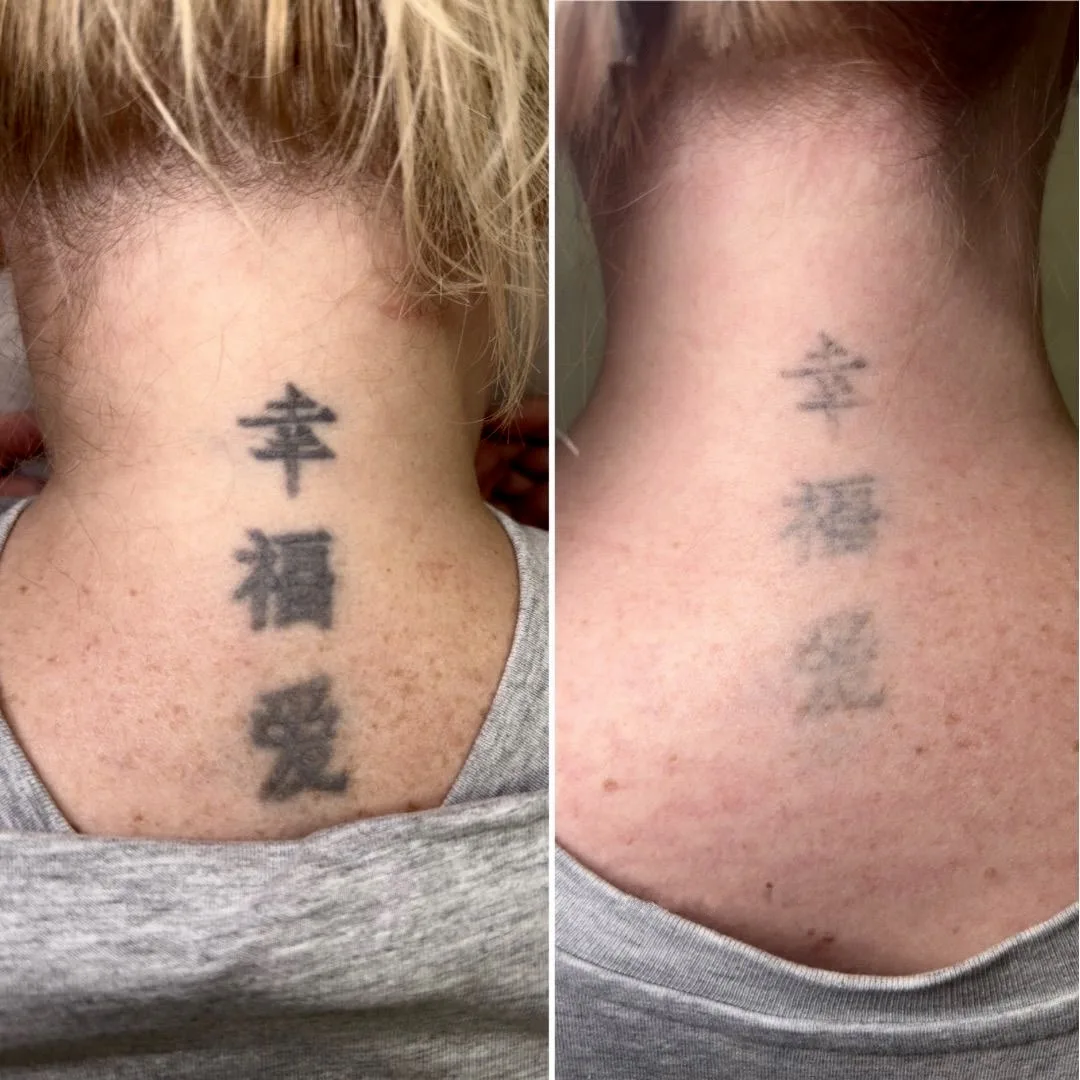
Chinese characters on back of neck
After 1 session
Progressive fragmentation of dense black ink. Significant fading; can be completed with additional sessions.
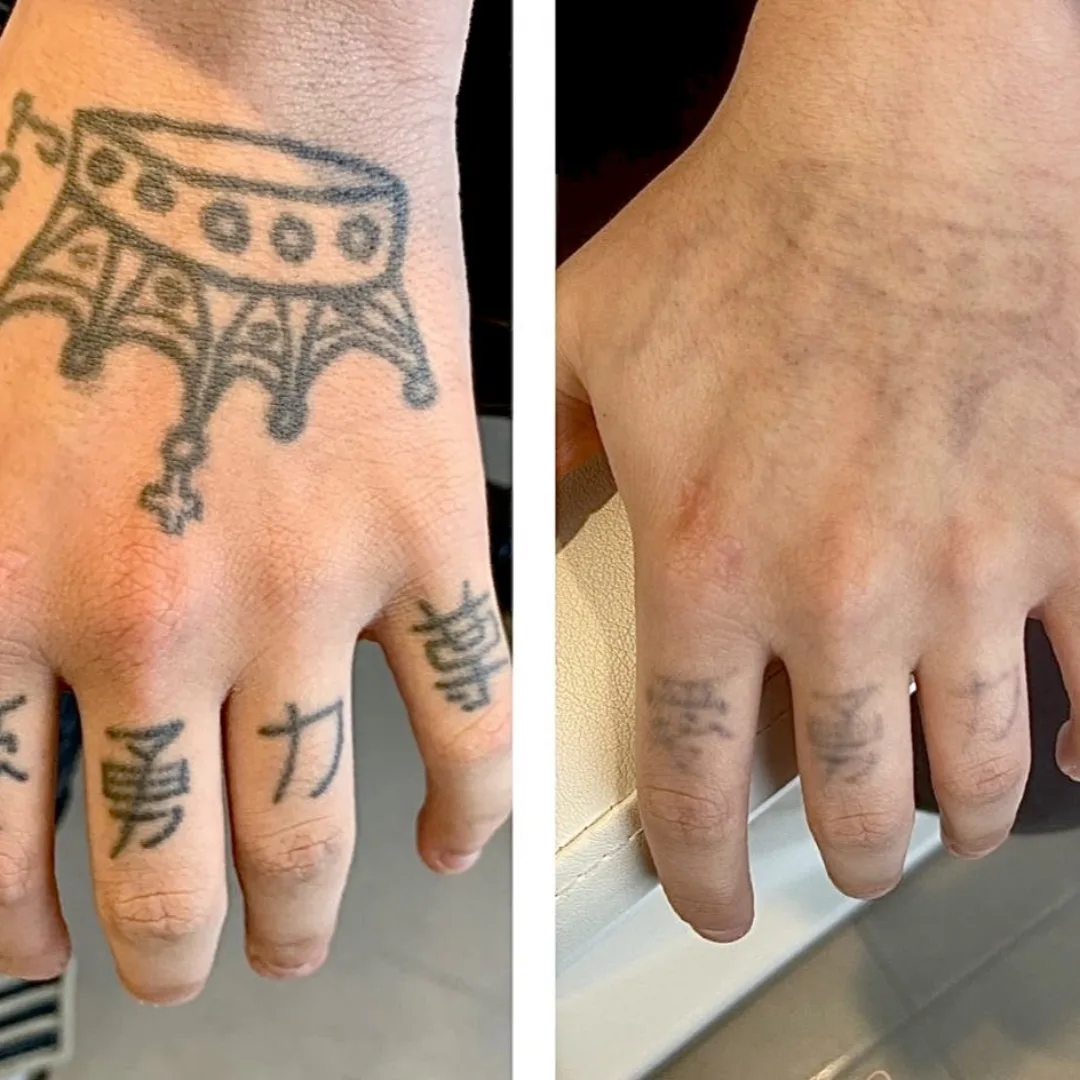
Tribal design on hand
After 4 sessions
Large-format tattoo with defined lines. Substantial fade, with finger characters also in progress.
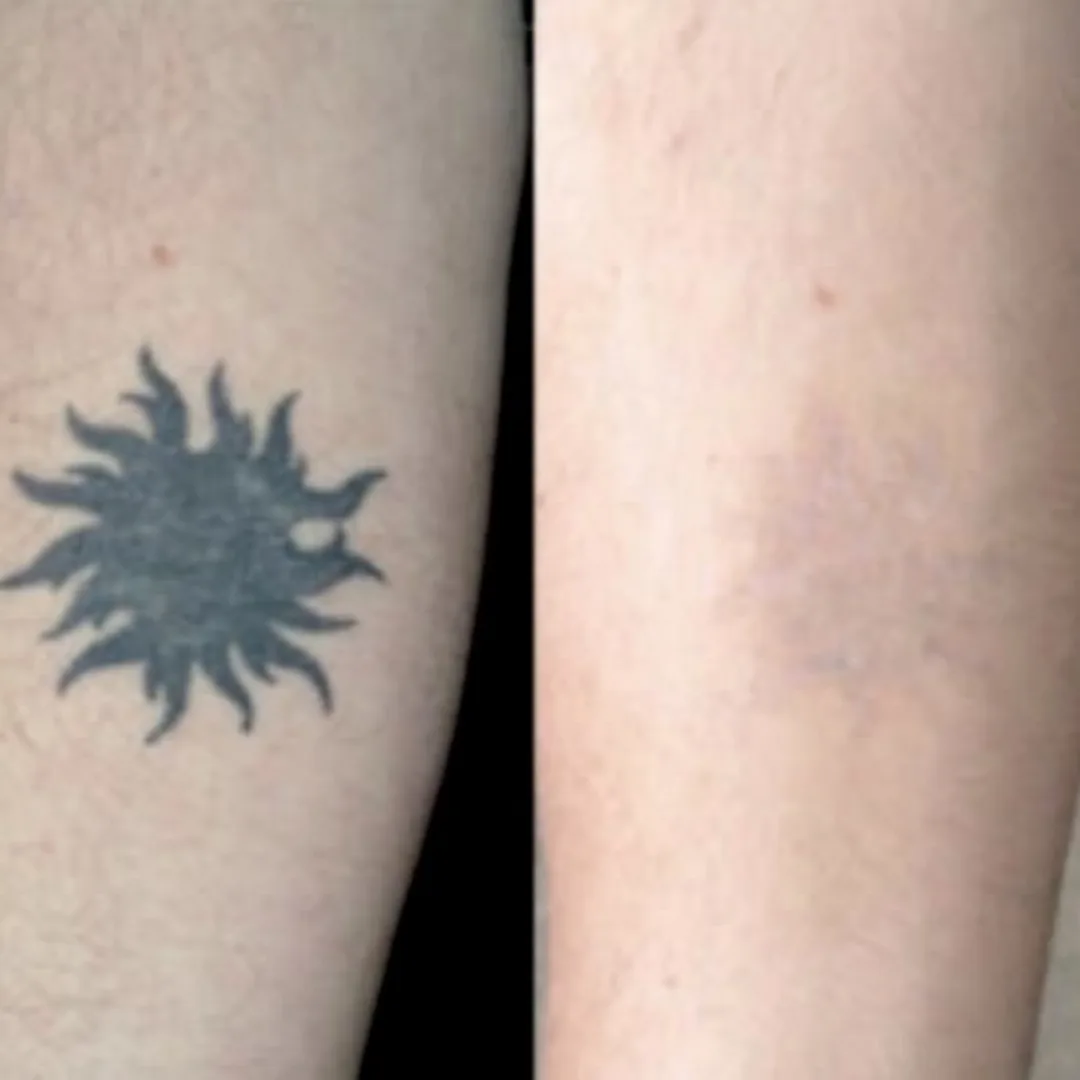
Solid black tribal sun
After 5 sessions
Saturated decades-old black tattoo. Dramatic reduction to a faint shadow, barely perceptible.
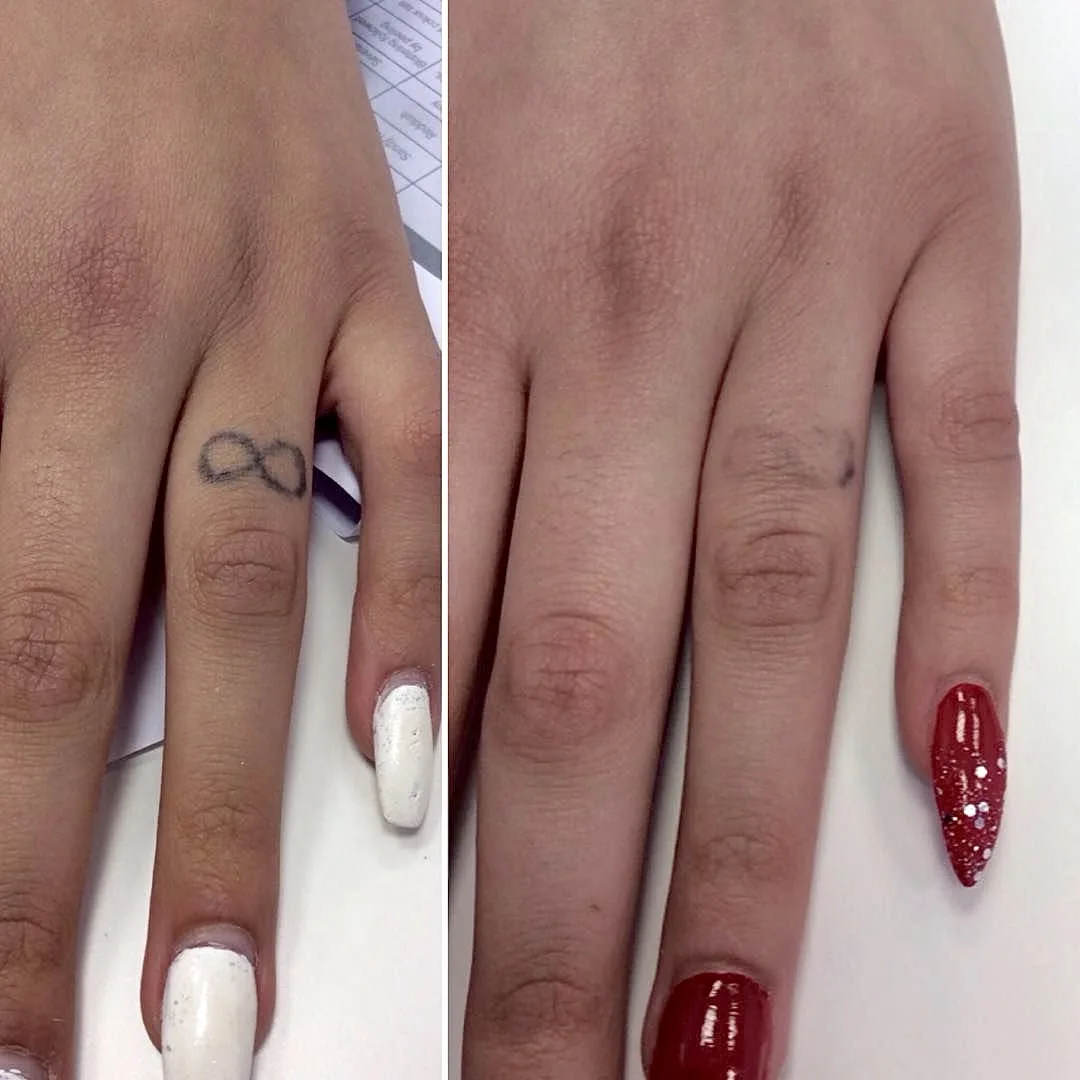
Infinity symbol on finger
After 3 sessions
Thin tattoo in delicate skin area. Near-complete fade with only a ghost trace remaining.
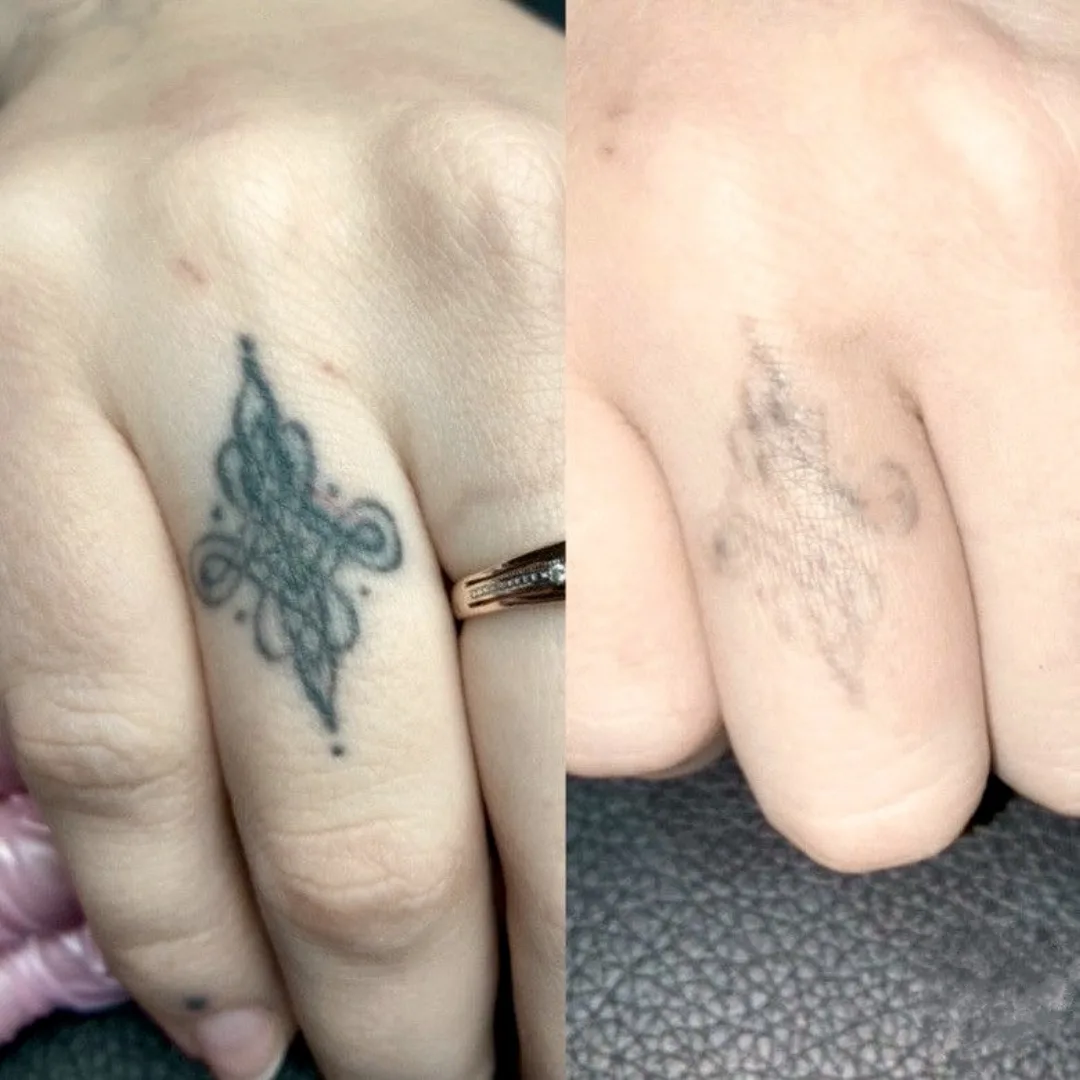
Ornament on ring finger
After 3 sessions
Fine-line ornamental design. A soft ghost outline remains and continues to fade with each session.
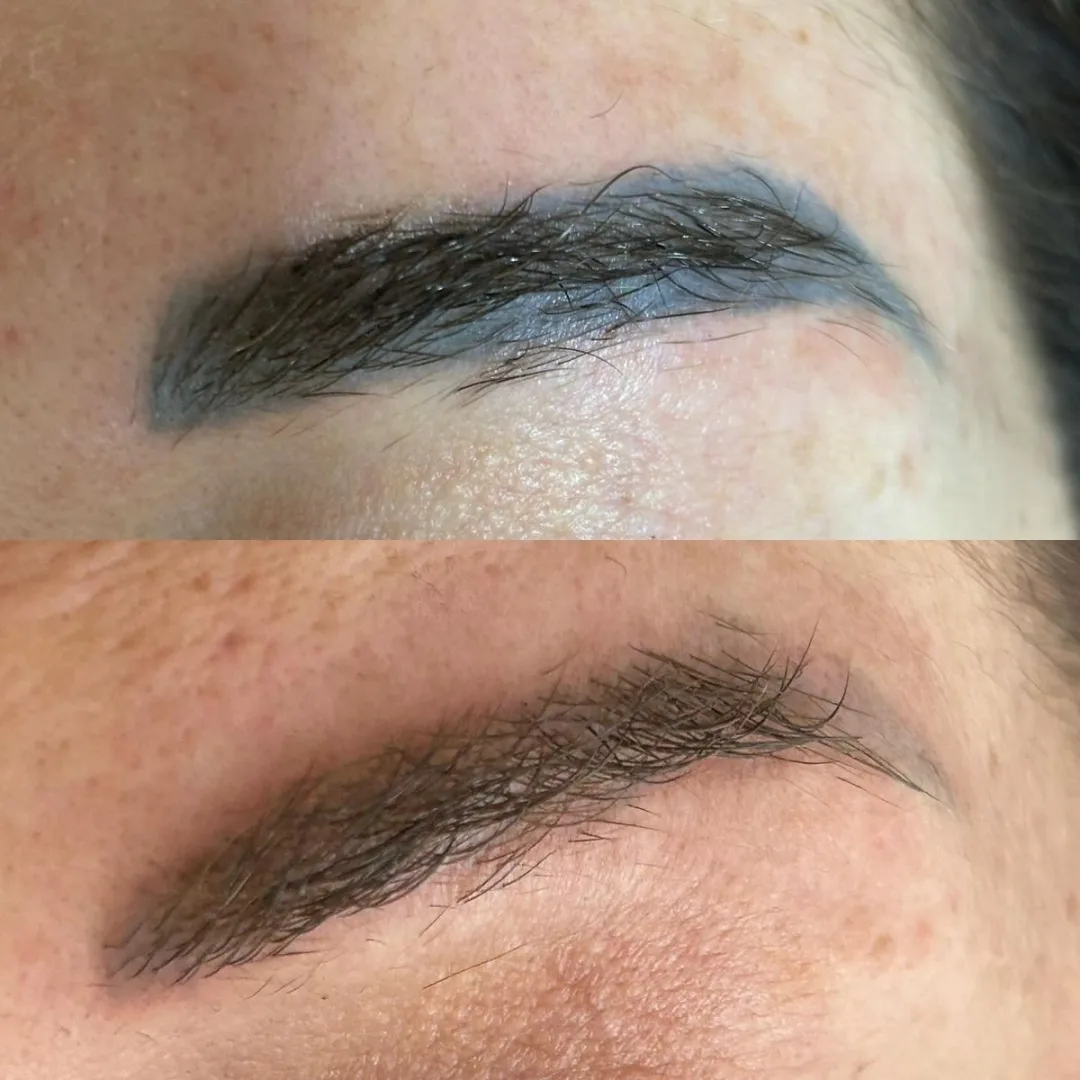
Removing a blue-gray brow tattoo
After 3 sessions
Old micropigmentation that had shifted to blue. After 3 sessions the pigment is barely visible, on its way to complete removal.
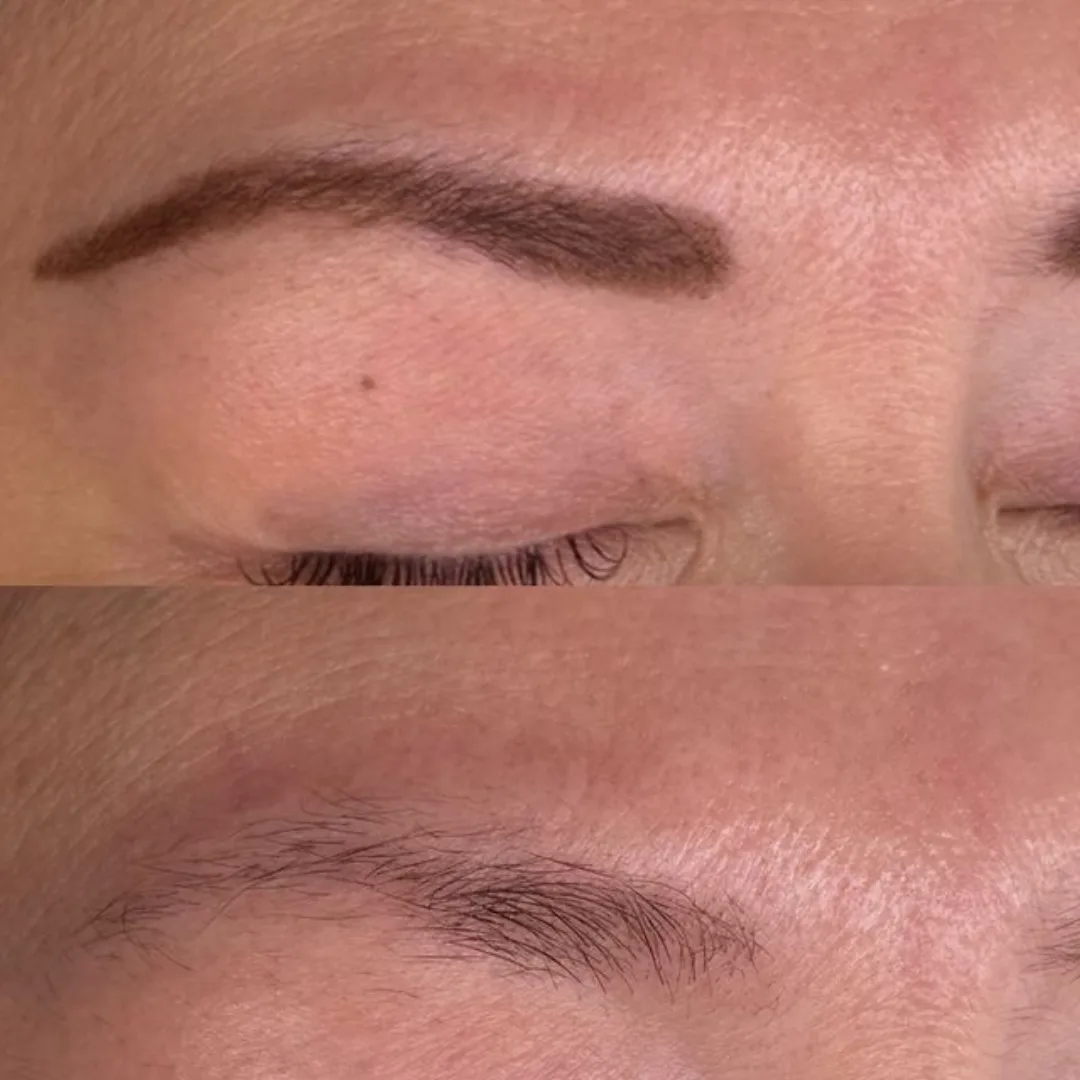
Brown microblading removal
After 2 sessions
Unwanted microblading, completely removed. Clean skin and natural brow hair again.
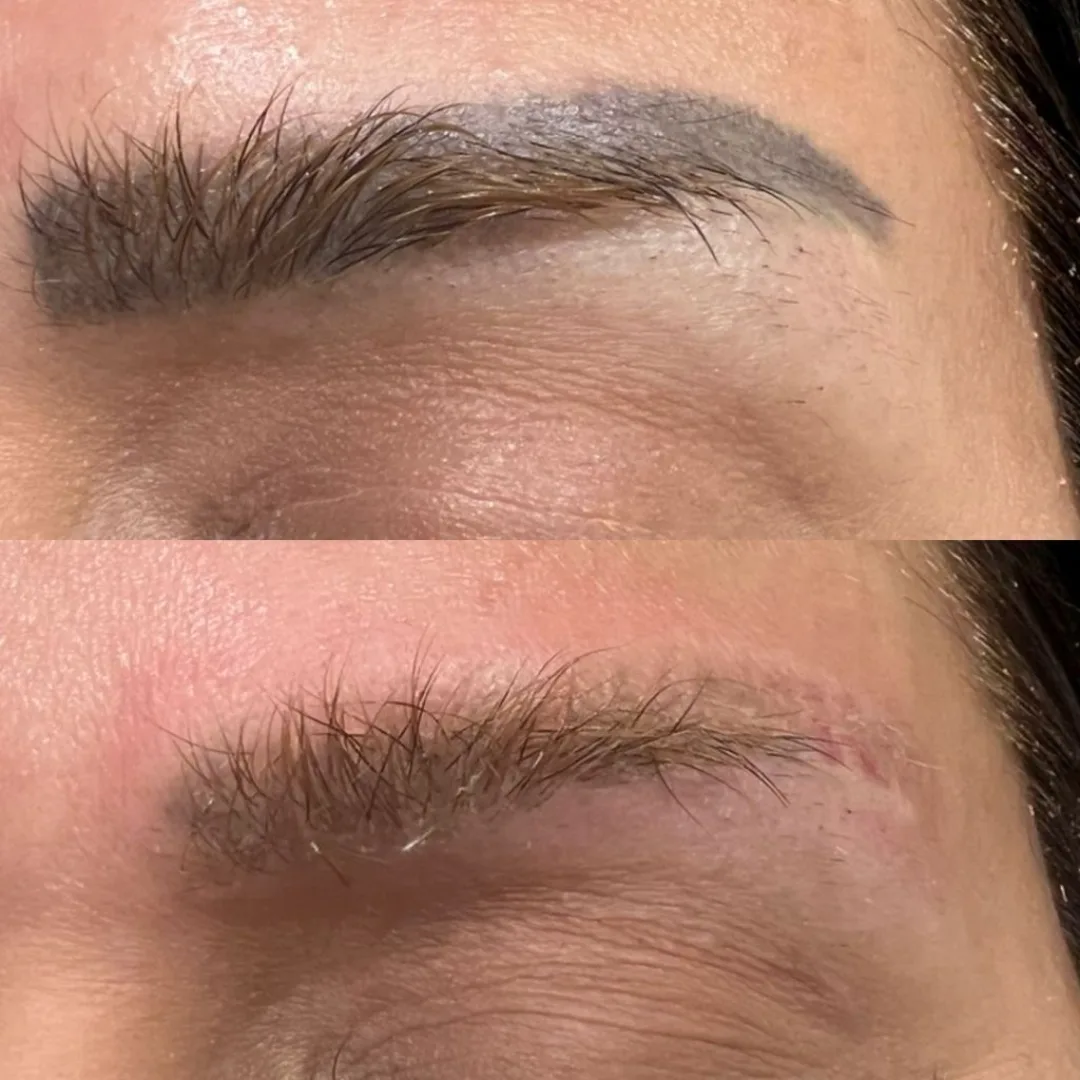
Immediate response after 1 session
After 1 session (same day)
Normal "frosting" effect immediately post-pulse. Visible lightening appears over the following 2-4 weeks as the lymphatic system clears the fragmented ink.
Results are individual and depend on ink type, depth, tattoo age, skin phototype, and biological response. Sessions required may vary. Photographs taken by the Elyzea team with patient consent.
How picosecond laser fades the tattoos above
Picosecond laser delivers energy pulses lasting one trillionth of a second (10⁻¹² seconds) — roughly 100 times shorter than older Q-switched nanosecond lasers. At those speeds, the energy hits the ink particle so fast that the dominant effect is mechanical: a photoacoustic shockwave that shatters the ink into fragments small enough for the lymphatic system to clear.
The shift from photothermal (heat-based) to photoacoustic (shockwave-based) clearance has two consequences. First, less heat reaches surrounding skin, which dramatically lowers the risk of post-inflammatory hyperpigmentation — the bane of tattoo removal on Latin skin. Second, the smaller ink fragments are easier for macrophages to engulf and transport away through the lymphatic system, which is why fading is visibly faster than with traditional Q-switched lasers.
At Elyzea, Dra. Geldres selects wavelength and pulse parameters per ink color and depth — different settings target dense black ink (cases above on the neck, hand, and forearm) versus the iron-oxide blue-gray and brown pigments common in old micropigmentation (the eyebrow cases). Spacing sessions at 6 to 8 weeks gives the lymphatic system time to fully clear the fragmented ink between treatments.
Picosecond removal timeline
Session day (Day 0)
A 5 to 30 minute treatment depending on tattoo size, with no anesthesia — the sensation is mild, like small pinches. Skin shows a brief whitening or "frosting" effect over the ink for 20 to 30 minutes — a normal sign that the photoacoustic shockwave has activated.
Days 1–7
Mild swelling subsides within 24 to 48 hours. Tiny pinpoint scabs may form and fall off naturally over 5 to 7 days — do not pick them. Strict SPF 50+ sun protection starts immediately.
Weeks 2–8 (lymphatic clearance)
Visible fading begins as macrophages clear the fragmented ink. Each session compounds on the previous one; next session is scheduled 6 to 8 weeks out to allow full lymphatic clearance.
Sessions 3–10 (full clearance)
Amateur black tattoos typically clear in 3 to 6 sessions; saturated professional and multicolor work needs 6 to 10. Micropigmentation usually resolves in 2 to 4 sessions. The cases on this page reflect this multi-session compounding.
Picosecond removal — frequently asked
How many sessions does tattoo removal typically need?
Most amateur black tattoos need 3 to 6 sessions; saturated professional tattoos and multicolor designs typically need 6 to 10 sessions. Eyebrow micropigmentation usually clears in 2 to 4 sessions. Dra. Geldres estimates your session count before treatment based on ink density, depth, age of the tattoo, and color mix.
When does the tattoo start to fade?
Visible fading begins 2 to 4 weeks after each session as macrophages clear the fragmented ink particles through the lymphatic system. Each session compounds on the previous one, with the most dramatic clearance typically visible between session 3 and the final treatment.
How spaced apart are the sessions?
Sessions are spaced 6 to 8 weeks apart. This interval gives the lymphatic system time to fully clear the ink fragments from the previous session and allows the skin to recover before the next pass — both prerequisites for safe and effective fading.
Is picosecond laser safe for darker skin tones?
Yes. Picosecond's ultra-short pulses generate a photoacoustic (mechanical) shockwave rather than the photothermal heat of older Q-switched lasers. Less heat means lower risk of post-inflammatory hyperpigmentation, making it the safer modality for Fitzpatrick IV–VI skin common in Latin American and Andean patients.
What downtime and aftercare should I expect?
Treated tattoos may show a brief whitening (frosting) for 20 to 30 minutes followed by mild swelling. Tiny pinpoint scabs may form over 5 to 7 days; do not pick them — they fall off naturally. Strict SPF 50+ sun protection is essential during the entire treatment course.
Want to know how many sessions your case would need?
Message us on WhatsApp about your tattoo or micropigmentation: we'll answer with prices and options for your case, and Dra. Geldres estimates the session count before treatment.
Message us on WhatsApp — we'll answer with prices and options for your case
Start your picosecond laser removal process
Dra. Geldres walks you through the protocol, realistic timeline, and what to expect at every session.