Pigmentation & Melasma Results
Real before-and-after cases from Elyzea Miraflores, Lima
Picosecond laser is the safest and most effective option for treating facial pigmentation, melasma, and hyperpigmentation. Its ultra-short pulses shatter pigment with minimal thermal damage, reducing the risk of rebound pigmentation — a critical consideration for Latin skin. Each case shown here is a real Elyzea patient, treated by Dra. Geldres with patient consent.
Dark spots, melasma & hyperpigmentation
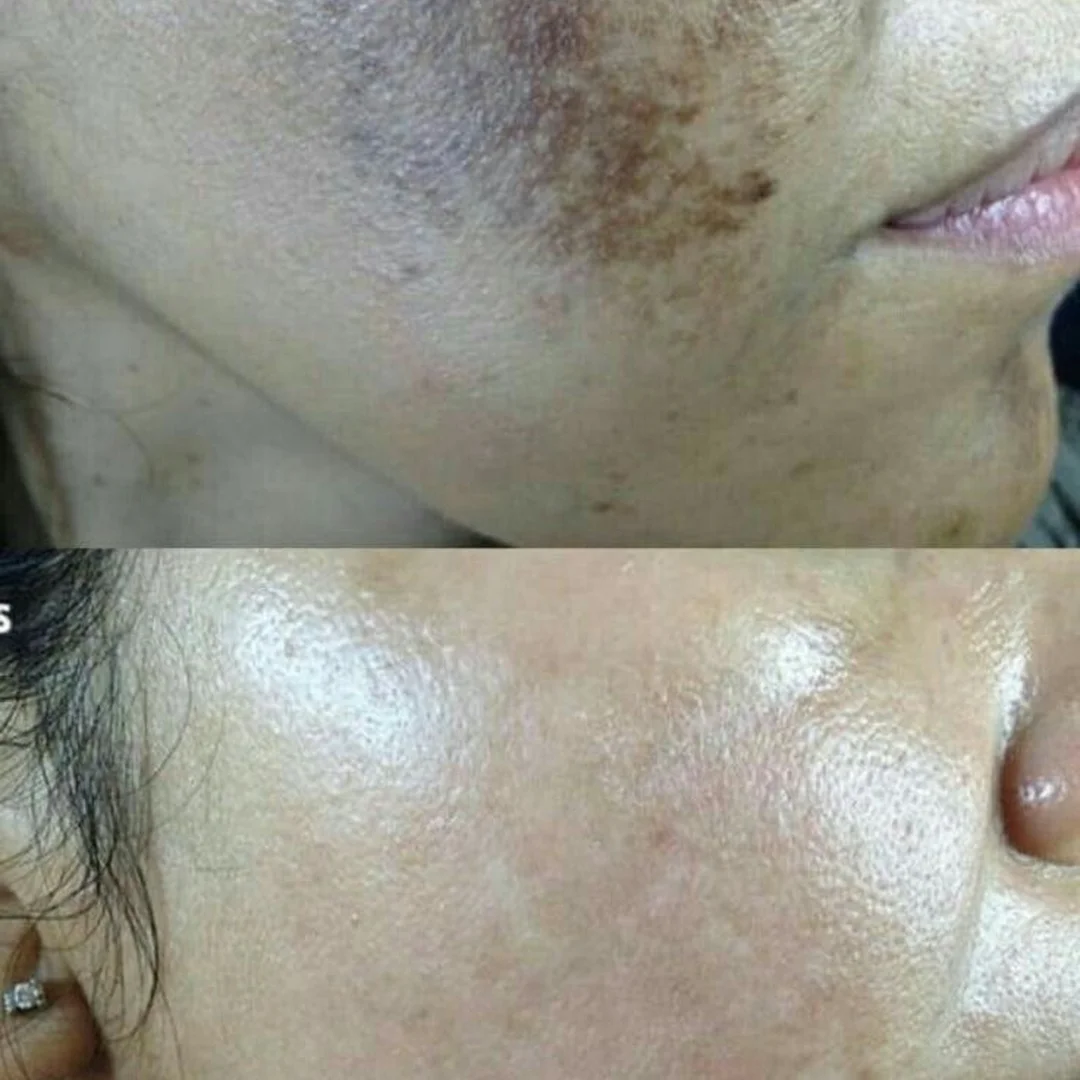
Severe facial hyperpigmentation
Picosecond laser protocol
Extensive deep pigmentation on the cheek. Final result shows even tone and renewed skin.
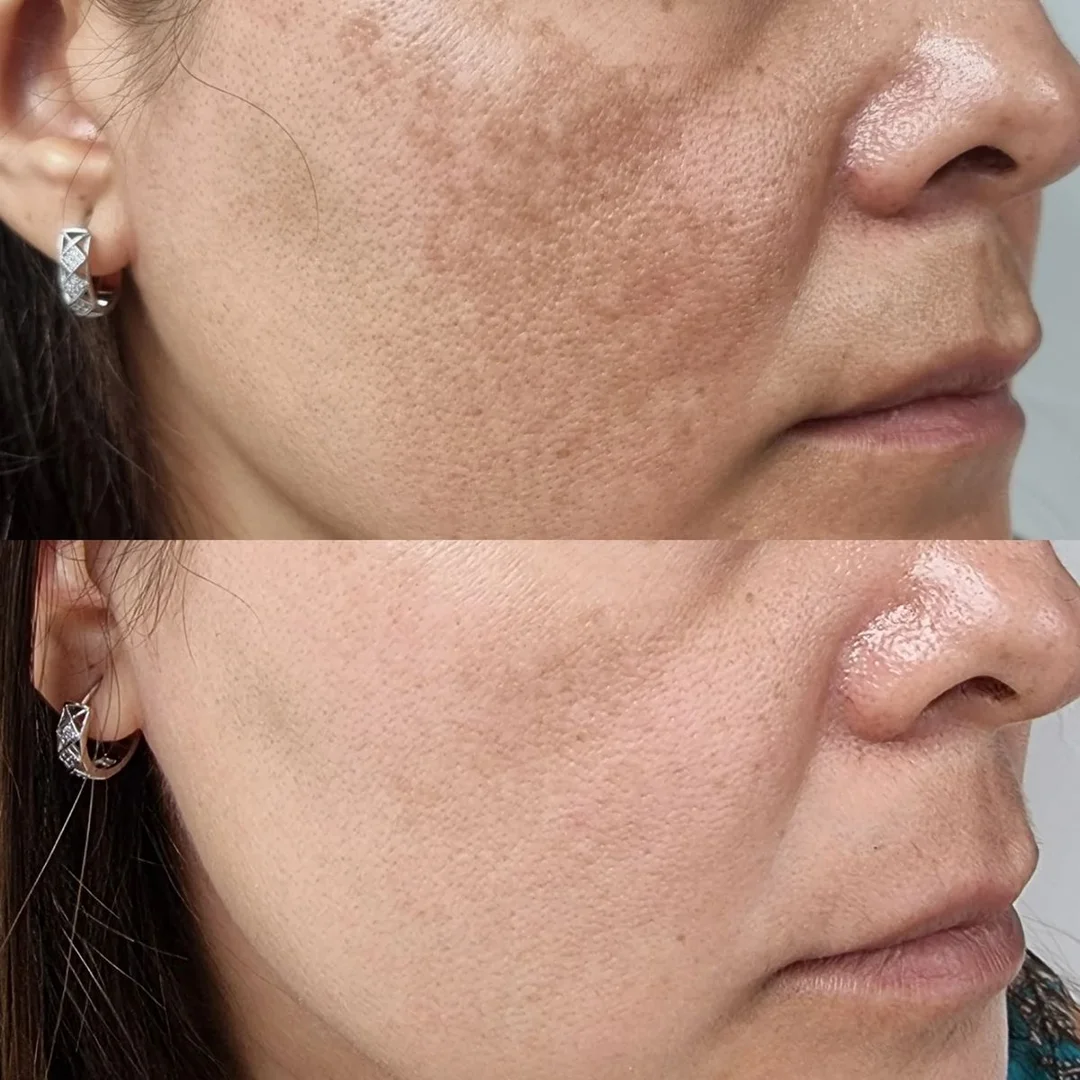
Melasma along jawline and cheek
Picosecond laser protocol
Significant lightening of persistent pigmentation with improved overall skin texture.
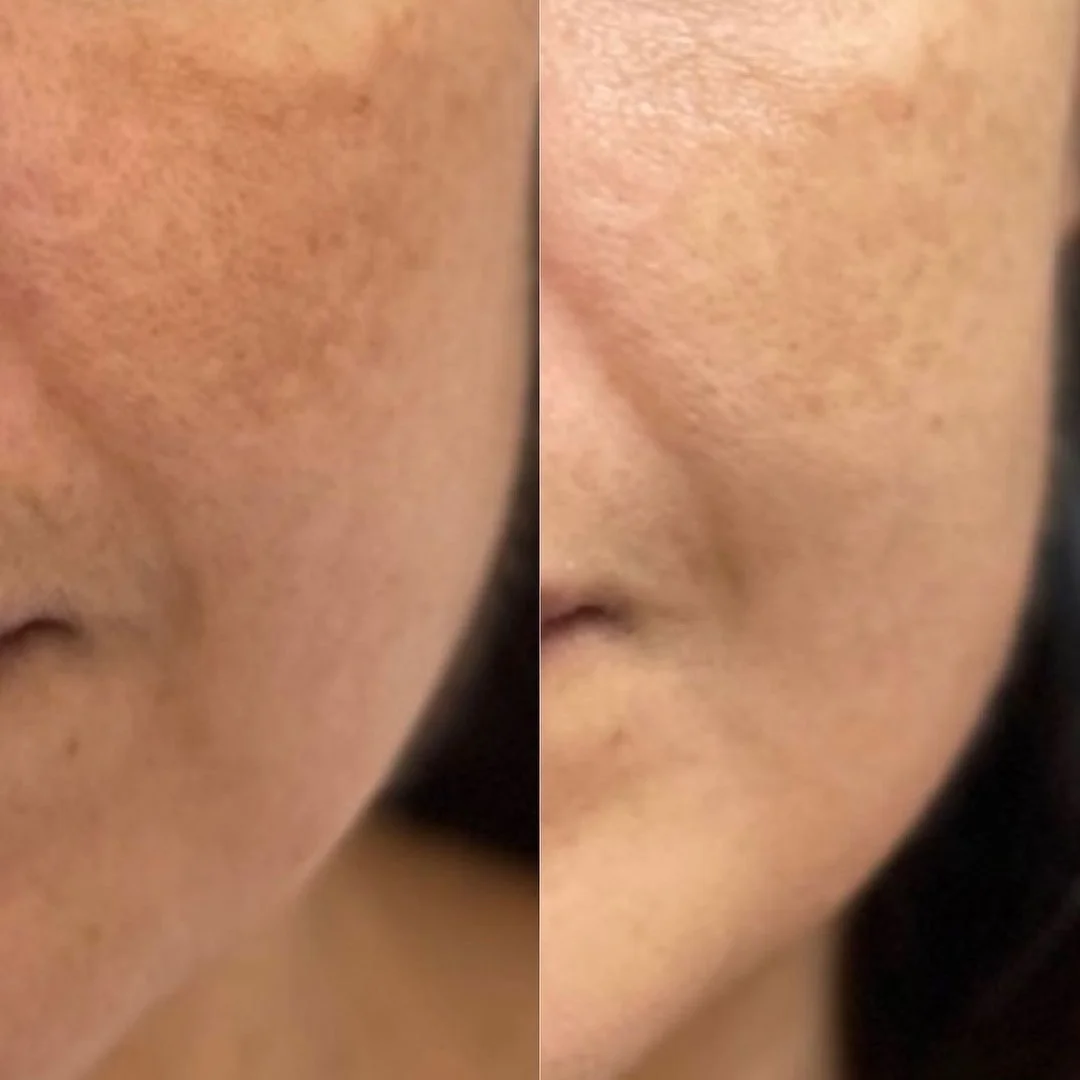
Sun spots and uneven tone
Picosecond laser protocol
Visible improvement in tone and luminosity. Smoother, fresher surface.
Results are individual and depend on skin type, pigmentation depth, and biological response. Sessions required may vary. Photographs taken by the Elyzea team with patient consent.
How picosecond laser fades the pigmentation above
Melasma and hyperpigmentation are notoriously hard to treat on Latin skin because heat-based lasers can worsen the very pigmentation they target. The post-inflammatory hyperpigmentation (PIH) cascade triggered by traditional Q-switched and IPL devices is the reason many darker-skinned patients are told to avoid pigment lasers entirely.
Picosecond technology changes that calculus. Its pulses last one trillionth of a second — too fast to deposit significant heat into surrounding tissue. Instead, the energy hits the melanin clusters as a photoacoustic shockwave, shattering them into microscopic fragments that the lymphatic system clears. Less heat reaches surrounding melanocytes, dramatically lowering the PIH risk that makes other modalities unsafe for Fitzpatrick IV–VI skin.
At Elyzea, Dra. Geldres differentiates between pigmentation types before treatment. Epidermal sun spots respond fastest. Mixed melasma (the cases shown above) requires gentler fluence, longer treatment courses (4 to 8 sessions), and concurrent at-home brightening agents (typically tyrosinase inhibitors) plus rigorous broad-spectrum sun protection — pigmentation is hormone- and UV-driven, so without sun discipline the treatment cannot hold.
Pigmentation treatment timeline
Diagnosis + priming (pre-treatment)
Dra. Geldres examines the pigmentation type — sun spots, post-inflammatory hyperpigmentation, or melasma. For melasma, a 4 to 6 week skin-priming phase with brightening agents is often started before the first laser session to calm the melanocytes.
Session day (Day 0)
A 15 to 30 minute treatment. Treated spots may temporarily darken or develop fine micro-crusts that flake off over 3 to 5 days as fragmented melanin is cleared.
Sessions 2–8 (every 4–6 weeks)
Sun spots typically clear in 2 to 4 sessions. Melasma requires 4 to 8 sessions and visible progressive lightening between each one. Strict SPF 50+ and brightening agents continue throughout.
Months 2–3 after final session
Tone stabilizes and renewed skin becomes visible. For melasma, lifelong maintenance — daily SPF 50+, tinted iron-oxide sunscreen, and periodic touch-up sessions — is required to hold the result.
Pigmentation results — frequently asked
How many sessions are typically needed?
Sun spots and superficial hyperpigmentation usually clear in 2 to 4 sessions. Melasma — deeper and more recurrence-prone — typically requires 4 to 8 sessions spaced 4 to 6 weeks apart, combined with at-home brightening agents and daily SPF 50+. Dra. Geldres confirms the exact plan during your free consultation after diagnosing the pigmentation type.
When do results become visible?
Each session produces progressive lightening over 2 to 4 weeks as fragmented melanin is cleared. The most uniform and stable tone is typically visible 2 to 3 months after the final session — the window the photographs on this page reflect.
Does melasma come back after treatment?
Melasma is a chronic condition driven by hormones, UV exposure, and visible light. Treatment dramatically lightens existing pigment, but lifelong maintenance — daily broad-spectrum SPF 50+, tinted (iron-oxide) sunscreen, and periodic touch-up sessions — is essential to prevent recurrence. Sun spots and post-inflammatory hyperpigmentation, by contrast, typically remain cleared with sun protection alone.
Why is picosecond laser the chosen modality for Latin skin?
Picosecond's ultra-short pulses generate a photoacoustic (mechanical) shockwave rather than the photothermal heat of older lasers. Less heat reaching surrounding tissue means a dramatically lower risk of post-inflammatory hyperpigmentation — the primary risk that makes traditional pigment lasers unsafe on Fitzpatrick IV–VI Latin and Andean skin.
What downtime and aftercare are required?
Downtime is minimal. Treated spots may temporarily darken or develop a fine micro-crust for 3 to 5 days before flaking off. Strict sun avoidance and SPF 50+ are essential — sun exposure during the treatment course can darken existing melasma and provoke new pigmentation.
Want to treat your pigmentation or melasma?
Book a free consultation with Dra. Geldres — virtual or in person. We evaluate your skin, diagnose the type of pigmentation, and design a personalized plan.
Free consultation in Miraflores
Start your pigmentation & melasma treatment
Dra. Geldres guides you through a safe protocol tailored to your skin phototype and the specific kind of pigmentation you have.